
Our Services
Drawing upon proven principles of behavior science, we offer specialized service dog training for individuals with anxiety, PTSD, and ADHD. Our behavior analysts are trained and certified in evidence-based behavior change techniques that address both the service dog and the handler. This integrated approach allows us to support the development of reliable service dog behaviors while also strengthening the handler-dog partnership, creating a more comprehensive and individualized training experience.
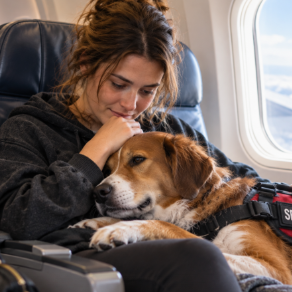
Anxiety
Training identifies the specific behaviors, environmental triggers, and functional limitations associated with the person’s anxiety, and then develops reliable canine responses that help the handler manage those situations more effectively.
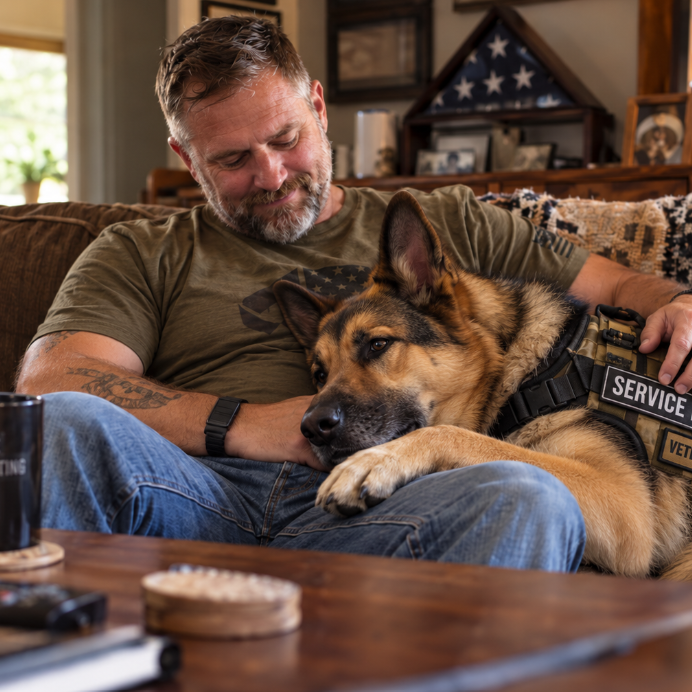
PTSD
Identify the specific PTSD related situations and behavioral responses that interfere with daily functioning, then train the dog to perform reliable, individualized behaviors that interrupt, mitigate, or assist with those responses.
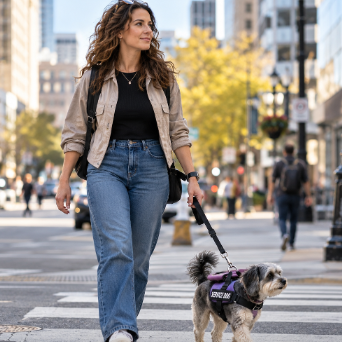
ADHD
Identify which behaviors or environmental situations are creating functional difficulties for that particular handler and then train the dog to perform specific responses that assist with those challenges.
Additional Details
How Does Behavioral Science Help?
Behavioral science provides a structured, evidence-based approach to service animal training by focusing on how behavior is learned, strengthened, and maintained. Training begins by identifying the specific situations in which a handler needs assistance and then teaching the service animal clear, reliable behaviors that can help address those needs.
Using principles such as positive reinforcement, prompting, shaping, repetition, and gradual exposure, trainers build complex service tasks step by step and help the animal perform those behaviors consistently across different environments and situations.
Behavioral science can also be applied to the handler. Handlers learn how to recognize and respond to their service animal’s trained behaviors, provide clear and consistent cues, appropriately reinforce desired behavior, and maintain the animal’s skills over time. They can also learn how their own behavior, routines, and interactions influence the effectiveness of the working partnership.
By addressing both sides of the relationship, a behavior-based approach goes beyond simply training the animal. It helps create a coordinated, individualized partnership in which the service animal and handler learn how to work together effectively, consistently, and with greater independence.
ANXIETY
Depending on the individual’s needs, a service dog may be trained to:
- Interrupt escalating anxiety or panic behaviors, such as repetitive movements, scratching, freezing, or dissociation.
- Provide deep pressure stimulation, for example by lying across the person’s lap or body during a panic episode.
- Create physical space in crowds, helping reduce feelings of being trapped or overwhelmed.
- Guide the handler to an exit or quieter location when anxiety becomes unmanageable.
- Retrieve medication, a phone, water, or another needed item during an episode.
- Wake or alert the handler during nightmares or nighttime anxiety.
- Perform grounding behaviors, such as nudging, pawing, or making physical contact to redirect attention to the present environment.
- Support transitions into anxiety-provoking environments, such as public transportation, workplaces, stores, or crowded venues.
- Seek help from another person when the handler is unable to do so independently.
For some people, the benefit goes beyond the individual task. Consistent task training can also make daily routines more predictable and give the handler a structured way to respond when anxiety begins to escalate.
PTSD
Common PTSD-related service dog tasks include:
- Interrupting panic, dissociation, or escalating distress by nudging, pawing, licking, or making physical contact.
- Providing grounding and deep pressure stimulation to help redirect attention during flashbacks, panic episodes, or periods of severe anxiety.
- Waking the handler from nightmares and remaining with them while they reorient.
- Creating physical space in crowded environments by positioning between the handler and other people.
- Guiding the handler to an exit or quieter location when the environment becomes overwhelming.
- Checking rooms or spaces on command before the handler enters, which can support individuals who experience significant hypervigilance.
- Retrieving medication, a phone, or another needed item during an episode.
- Seeking assistance from another person if the handler becomes incapacitated or unable to respond.
- Interrupting harmful or repetitive behaviors associated with distress.
- Supporting daily routines and community participation, such as going to work, shopping, traveling, or attending appointments.
For someone with PTSD, the goal is not simply to provide emotional comfort. A psychiatric service dog is trained to perform specific tasks related to the individual's disability.
ADHD
- Interrupting hyperfocus by nudging or otherwise prompting the handler to transition to another task.
- Providing reminders for routines, such as taking medication, getting ready to leave, or beginning a scheduled activity.
- Retrieving needed items such as medication, a phone, keys, or a bag.
- Redirecting repetitive or dysregulated behavior through trained physical prompts.
- Providing grounding during sensory or emotional overload, including trained pressure or contact behaviors.
- Helping with transitions by prompting the handler to move from one activity or environment to another.
- Supporting task initiation by responding to alarms, cues, or established routines with a trained behavior.
- Interrupting impulsive movement or unsafe wandering, where appropriate and safely trained.
- Guiding the handler to a designated location or person when the individual becomes overwhelmed or disoriented.
- Supporting structured daily routines through predictable, consistently reinforced interactions.
For a behavior-based training program, ADHD is especially well suited to an individualized functional approach. Rather than training a generic set of “ADHD tasks,” the trainer can first identify which behaviors or environmental situations are creating functional difficulties for that particular handler and then train the dog to perform specific responses that assist with those challenges.
Contact Us for More Info
Telephone: +1 888 983 1770
E-mail: hello@bxincorporated.com
Address: 940 Monroe Avenue NW, Grand Rapids, MI 49503